
What to know before you book
- Not every wisdom tooth needs removal.
- Repeated infection or damage can make removal more likely.
- Imaging helps assess position and risk.
- Aftercare is important for healing and comfort.
Why wisdom teeth become painful
Wisdom teeth are the last molars to erupt. Sometimes there is limited space, the tooth is partly covered by gum, or the area is difficult to clean. Food trapping and bacteria can lead to gum inflammation, decay or repeated infection around the tooth.
When removal may be discussed
Removal may be considered if the wisdom tooth causes recurring infection, persistent pain, swelling, decay, cyst-related concern, damage to a neighbouring tooth or hygiene problems that cannot be managed predictably.
- Repeated swelling or gum infection around the back tooth.
- Decay in the wisdom tooth or adjacent molar.
- Pain or pressure linked to tooth position.
- Difficulty cleaning because the tooth is partly erupted.
What the assessment includes
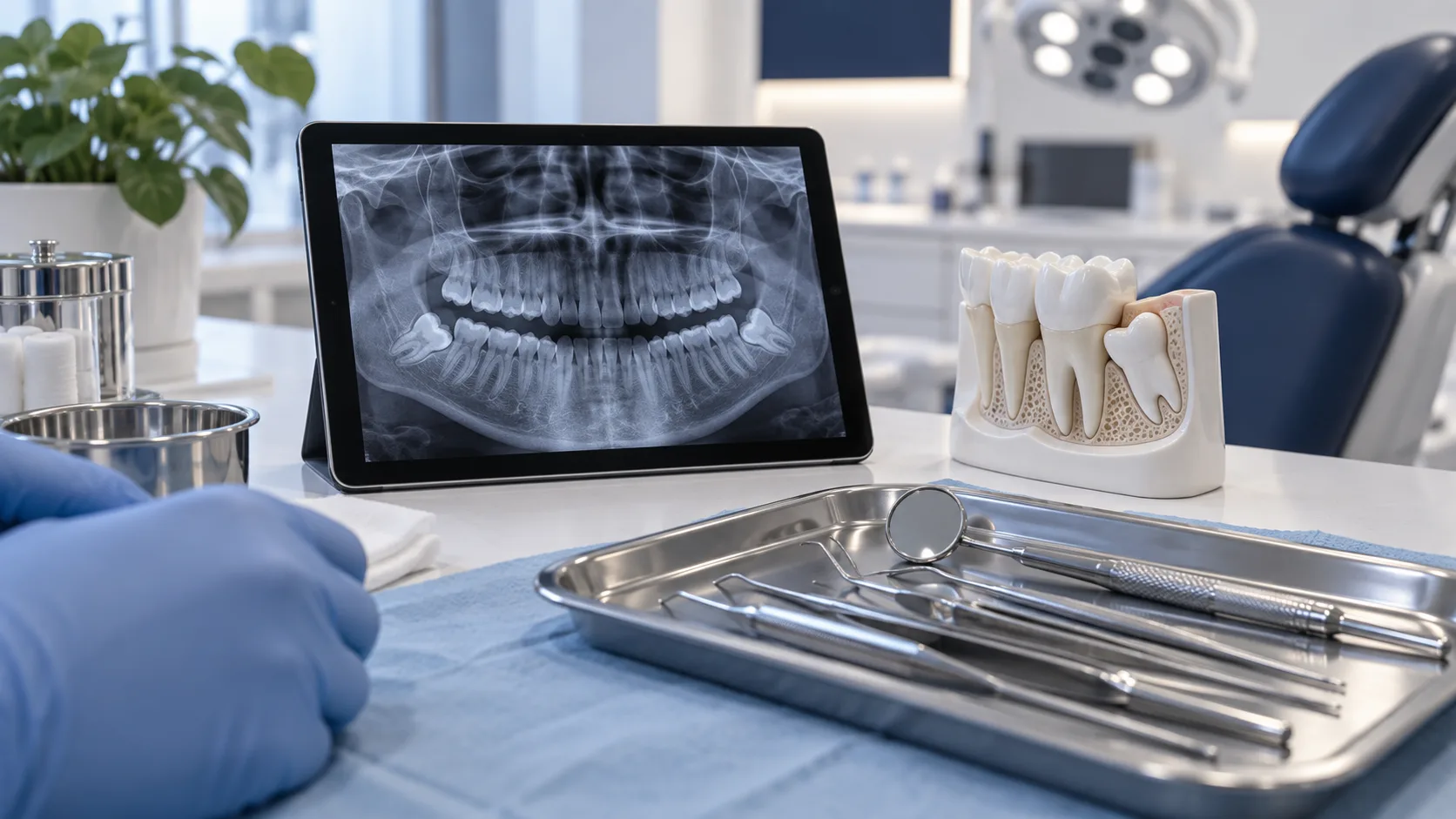
The clinician reviews symptoms, examines the area and may request imaging to understand tooth position and nearby structures. The plan should explain whether monitoring, cleaning support or removal is more appropriate.
What removal and recovery can involve
Wisdom tooth removal may be simple or surgical depending on position and anatomy. Recovery can include temporary soreness, swelling and diet changes. Written aftercare should explain cleaning, medicines if prescribed and when to return.
Warning signs after removal
Patients should contact the clinic if bleeding is heavy, swelling worsens after the expected period, pain becomes severe, fever develops or there is difficulty breathing or swallowing. Each patient’s aftercare instructions should be followed carefully.
Common questions
Should wisdom teeth be removed before they hurt?
Not always. Preventive removal depends on position, risk, age, symptoms and professional assessment. Some wisdom teeth can be monitored.
How long is wisdom tooth recovery?
Recovery varies with the difficulty of removal and the patient’s healing response. Many patients need a few days of modified diet and care, but your surgeon should give case-specific guidance.
Can wisdom tooth pain go away by itself?
Symptoms may settle temporarily, but recurrent pain or swelling should be assessed because the underlying cause may remain.
When an examination matters
Online information can help you prepare, but it cannot identify the cause of symptoms or determine which treatment is appropriate. A clinician may review your history, examine your teeth and gums, and recommend imaging or additional tests when needed.
Patient education references
These external resources are included for general learning. They do not replace the advice given after your own dental examination.