
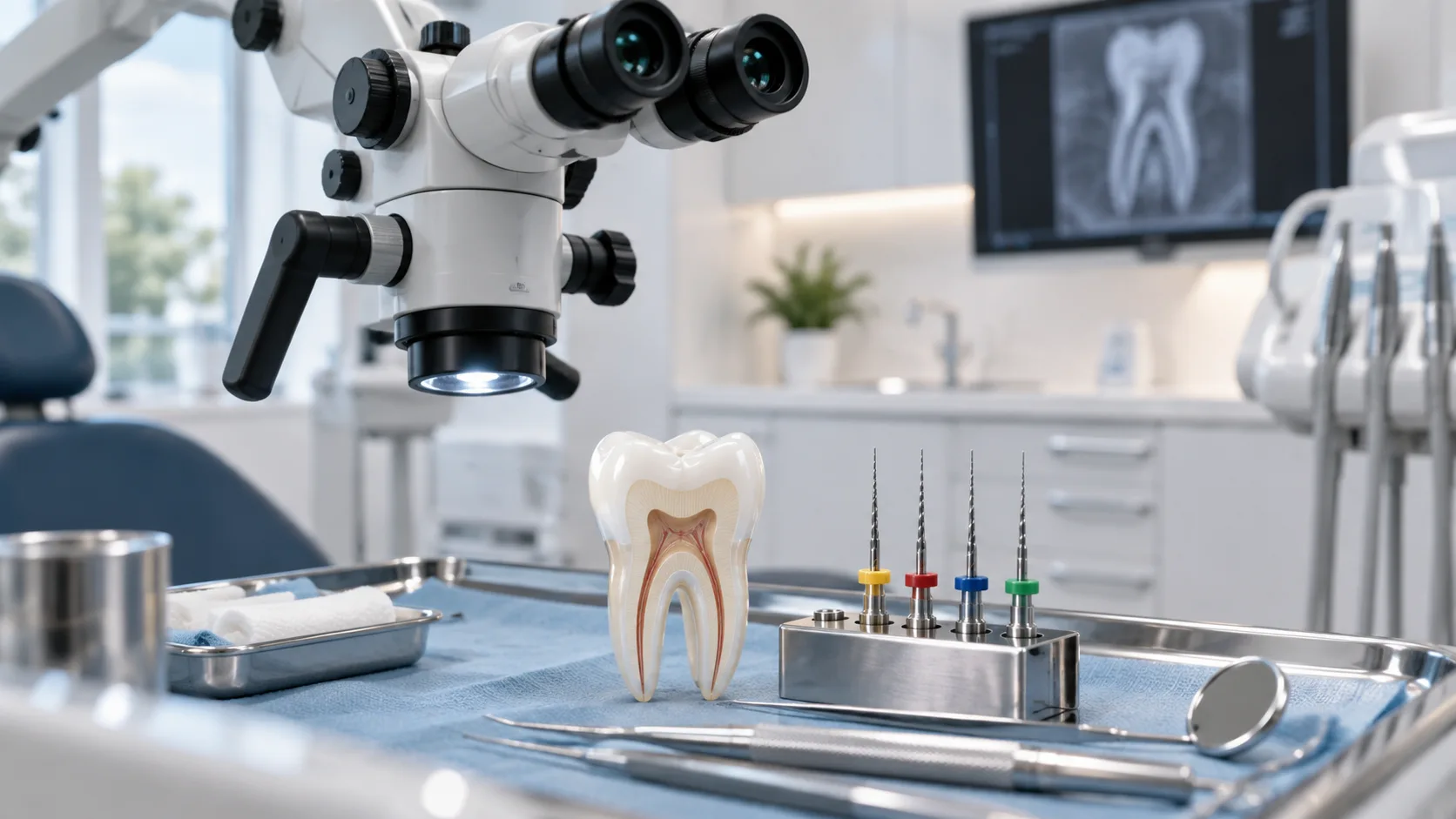
What to know before you book
- Tooth pain has many causes; symptoms alone are not a diagnosis.
- Root canal treatment aims to save a natural tooth when clinically appropriate.
- A final restoration may be needed to protect the treated tooth.
- Swelling, fever or spreading pain should be assessed promptly.
What root canal treatment means
Root canal treatment is endodontic care for the inside of a tooth. When the pulp tissue becomes inflamed or infected, the clinician may clean, shape and seal the root canal system so the tooth can be restored and monitored.
Common symptoms that may need assessment
Symptoms may include lingering sensitivity to hot or cold, spontaneous toothache, pain on biting, swelling, tenderness, a darkened tooth or a small gum swelling near the root. These signs do not confirm a root canal by themselves, but they do justify examination.
- Pain that wakes you or does not settle.
- Sensitivity that lingers after the stimulus is gone.
- Swelling, bad taste or gum pimple near a tooth.
- Tenderness when chewing or tapping the tooth.
Why diagnosis matters
Sinus issues, gum disease, cracks, high fillings and referred pain can feel similar to root canal pain. Diagnosis may involve clinical tests, bite assessment and dental imaging before treatment is recommended.
The usual treatment sequence
After anaesthesia and isolation, the clinician accesses the canal system, cleans and shapes it, disinfects where appropriate and seals it. Some teeth can be completed in one visit, while others require staged appointments depending on infection, complexity and symptoms.
Recovery and restoration
Mild tenderness can occur after treatment. The tooth may need a final filling or crown depending on remaining structure and biting forces. Patients should follow aftercare instructions and return if symptoms increase or feel unusual.
When urgent advice is needed
Seek prompt dental advice for facial swelling, fever, spreading pain, trauma, difficulty opening the mouth or symptoms that worsen quickly. Online guidance should never delay urgent care.
Common questions
Is root canal treatment painful?
Modern root canal treatment is usually performed with dental anaesthesia. Some soreness can occur afterwards, but severe or worsening symptoms should be discussed with the clinic.
Can antibiotics replace a root canal?
Antibiotics alone do not clean the inside of an infected tooth. They may be prescribed in selected situations, but definitive dental treatment is often still needed.
Will I need a crown after root canal?
Some teeth need a protective restoration after root canal treatment, especially back teeth or teeth with significant structure loss. Your dentist will advise based on the tooth.
When an examination matters
Online information can help you prepare, but it cannot identify the cause of symptoms or determine which treatment is appropriate. A clinician may review your history, examine your teeth and gums, and recommend imaging or additional tests when needed.
Patient education references
These external resources are included for general learning. They do not replace the advice given after your own dental examination.