
What to know before you book
- Implant planning begins with diagnosis, not a fixed package.
- The implant and the visible replacement tooth are separate parts of the plan.
- Healing time varies; some cases need staged treatment or preparatory care.
- Long-term success depends on hygiene, reviews and maintenance.
What is a dental implant?
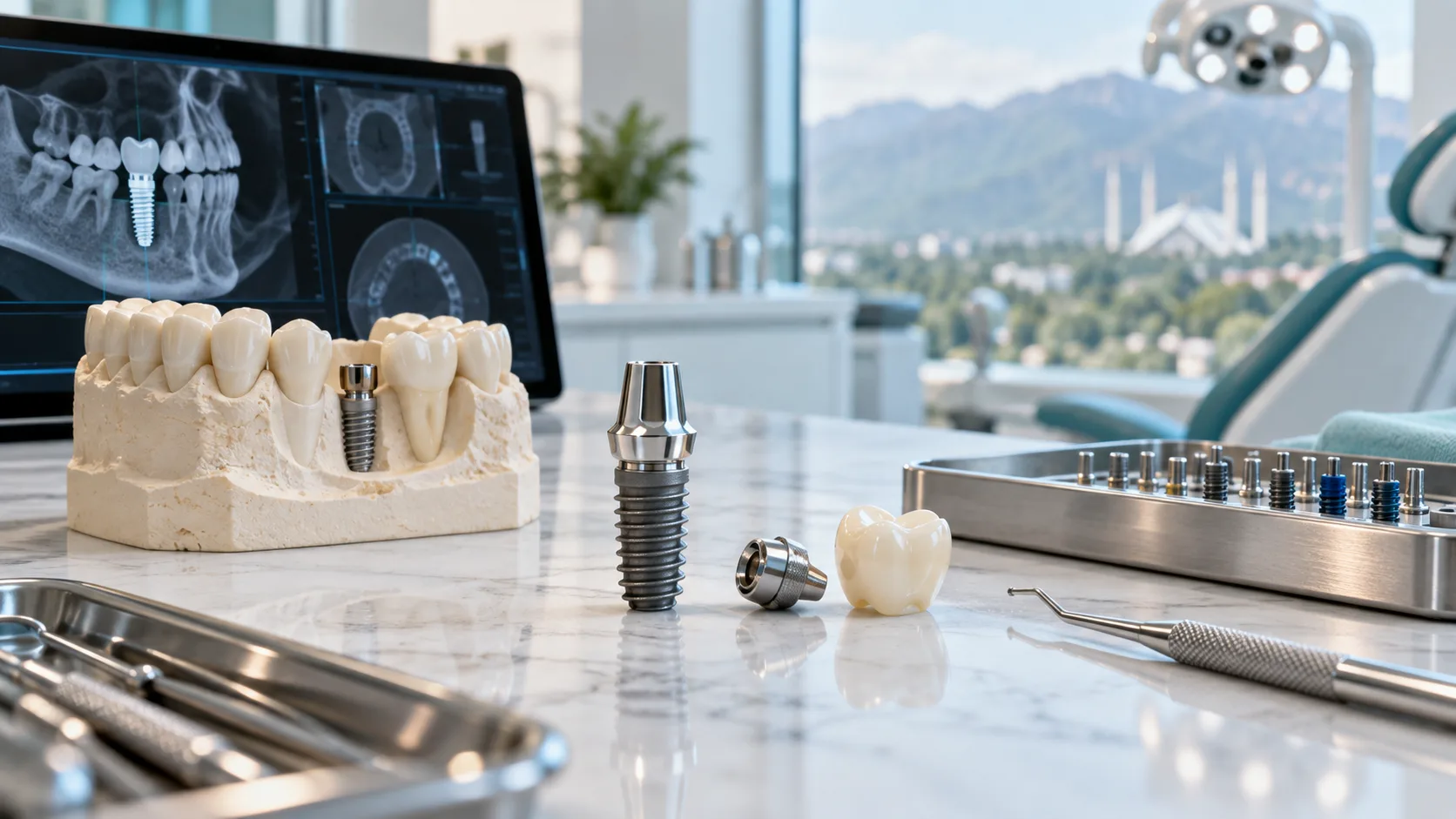
A dental implant is a small fixture placed in the jaw to support a planned replacement tooth. It is not the visible tooth itself. The visible part may be a crown, bridge or denture attachment, and the design should be planned around chewing function, appearance, gum health and long-term maintenance.
Step 1: Consultation and medical history
The first appointment should clarify your concern, missing-tooth history, general health, medicines, smoking status, previous dental treatment and expectations. This stage is important because not every missing tooth should automatically be replaced with an implant, and some patients may benefit from alternatives.
- Discuss the missing tooth or teeth.
- Review medical and dental history.
- Ask about alternatives, risks, sequence and expected visits.
- Confirm whether the case needs specialist surgical planning.
Step 2: Examination and imaging
The dentist or oral surgeon assesses the gums, bite, neighbouring teeth and bone support. Imaging may be required to understand bone volume and the position of important structures. A reliable implant estimate should come after this assessment, not before it.
Step 3: Treatment planning
Implant planning connects surgery with the final tooth design. The clinician considers the number of implants, implant position, crown or bridge design, shade, bite forces, hygiene access and whether any preparatory care is needed. A clear written plan helps patients understand the journey before treatment begins.
Step 4: Implant placement
If treatment is suitable and consent is confirmed, the implant is placed under appropriate dental anaesthesia and sterile clinical protocols. After placement, the clinic gives written aftercare instructions covering diet, cleaning, medication if prescribed and review appointments.
Step 5: Healing and restoration
Healing time varies between patients and sites. Once the implant is ready for restoration, the final crown, bridge or denture component is planned. The restoration must fit the bite, be cleansable and match the patient’s functional and aesthetic needs.
Maintenance after treatment
Implants need daily cleaning and professional review. Patients should ask how to clean around the implant, how often reviews are needed and what warning signs should prompt a visit. Implant treatment is a long-term responsibility, not a one-time procedure.
Common questions
How long does a dental implant take?
The appointment for implant placement is different from the full treatment timeline. The complete process may take several months because healing and restoration are staged according to the case.
Is everyone suitable for dental implants?
No. Suitability depends on gum health, bone support, medical history, oral hygiene and the planned restoration. A clinical examination and imaging are needed before advice can be given.
Can I get an implant immediately after extraction?
Sometimes immediate placement may be considered, but it is not suitable for every case. Infection, bone support, tooth position and restoration needs all affect the decision.
When an examination matters
Online information can help you prepare, but it cannot identify the cause of symptoms or determine which treatment is appropriate. A clinician may review your history, examine your teeth and gums, and recommend imaging or additional tests when needed.
Patient education references
These external resources are included for general learning. They do not replace the advice given after your own dental examination.