
What to know before you book
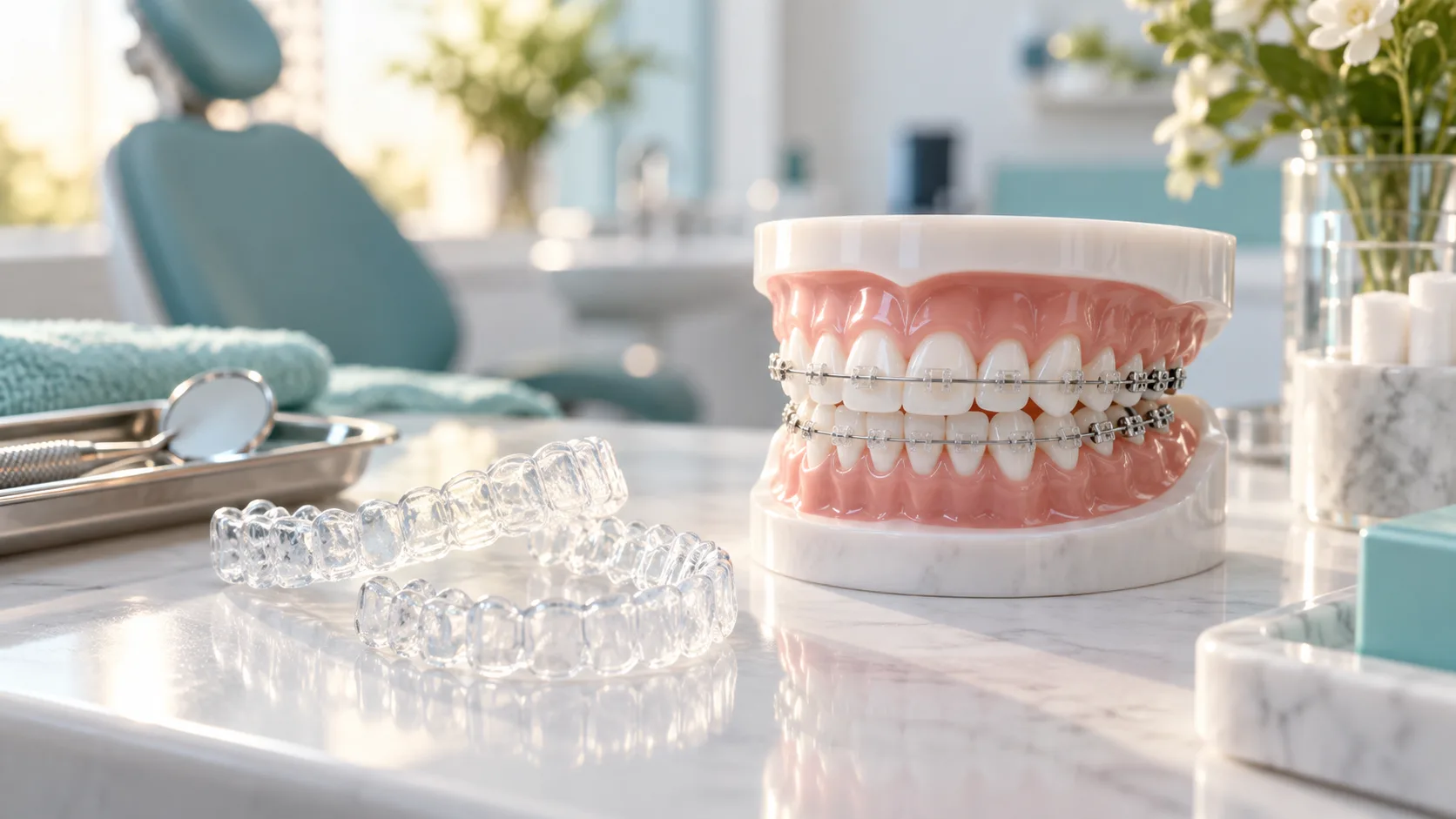
- Braces are fixed; aligners are removable and require consistent wear.
- Complex movements may need fixed appliances or staged planning.
- Retainers are essential after active treatment.
- The healthiest option is the one planned around diagnosis and stability.
What orthodontic treatment is designed to do
Orthodontic treatment is not only about a straighter-looking smile. A careful plan considers tooth position, bite relationship, oral hygiene, gum health, facial growth in younger patients and long-term stability. Appearance matters, but function and maintenance matter too.
How braces work
Braces are fixed appliances bonded to the teeth and adjusted over time. Because they stay in place, they can be helpful for many types of movement. Patients need to be careful with brushing, food choices and regular adjustment visits throughout treatment.
- Useful for many alignment and bite concerns.
- Require detailed cleaning around brackets and wires.
- May involve temporary discomfort after adjustments.
- Usually need planned retainer wear after treatment.
How clear aligners work
Clear aligners are removable trays changed in a planned sequence. They may be suitable where the required tooth movement can be predictably planned and the patient can wear them as instructed. Because they are removable, discipline is a major part of success.
Which option is better?
There is no universal winner. Braces may be more suitable for some complex movements, while aligners may be appropriate for selected patients who want a removable, less visible option. Your orthodontist should explain what is predictable for your case and why.
What happens during consultation
An orthodontic visit may include photographs, scans or impressions, bite assessment and a discussion of treatment goals. The plan should cover appliance choice, likely duration, hygiene expectations, appointment frequency, fees and retention.
Retainers: the part patients should not ignore
Teeth can shift after active treatment. Retainers help preserve the achieved position and are part of the long-term orthodontic plan. Ask how often retainers should be worn and what to do if one breaks or feels tight.
Common questions
Are clear aligners faster than braces?
Not always. Treatment time depends on the movement required, case complexity and patient compliance. Some aligner cases are efficient, while others are better managed with fixed braces.
Do braces hurt?
Braces can cause temporary soreness, especially after fitting or adjustments. Persistent or severe pain should be discussed with the clinic.
Can adults get orthodontic treatment?
Many adults can be assessed for braces or aligners if gum health and clinical conditions are suitable. The plan depends on diagnosis and goals.
When an examination matters
Online information can help you prepare, but it cannot identify the cause of symptoms or determine which treatment is appropriate. A clinician may review your history, examine your teeth and gums, and recommend imaging or additional tests when needed.
Patient education references
These external resources are included for general learning. They do not replace the advice given after your own dental examination.